













Did you know that your gut health can also affect your teeth and gums? Many people underestimate the close connection between the digestive system and oral health – yet there is increasing evidence that chronic inflammatory bowel diseases (IBD) such as Crohn's disease and ulcerative colitis can increase the risk of periodontitis.
Why is that? IBD is often associated with a weakened immune system, which promotes inflammation throughout the body – including in the mouth. In addition, certain medications and a changed diet can make the gums more sensitive.
The good news is: With the right dental care, you can actively protect your gums. In this article, you will learn why dental check-ups are particularly important for IBD and what measures can help you prevent periodontitis.
What are chronic inflammatory bowel diseases (IBD)?
Chronic inflammatory bowel diseases, or IBD for short, are serious diseases of the gastrointestinal tract characterized by persistent or recurrent inflammation in the digestive system. The two most common forms are Crohn's disease and ulcerative colitis, which often run in flare-ups and can significantly affect the lives of those affected.
While Crohn's disease can affect the entire digestive tract from the mouth to the anus, ulcerative colitis is limited to the large intestine. Typical symptoms such as persistent diarrhea, cramping abdominal pain, weight loss, and severe exhaustion can make everyday life difficult. But what many people don't know is that IBD not only affects the gut – oral health can also be severely impaired.
Why can an intestinal disease also affect your oral health?
Although IBD primarily affects the digestive tract, there are several mechanisms that can lead to teeth and gums also being affected.
1. A weakened immune system
IBD is an autoimmune disease in which the immune system overreacts and triggers inflammatory processes throughout the body – including in the oral cavity. This makes the gums more susceptible to infections, which increases the risk of periodontitis (gum inflammation).
2. Altered eating habits
Many people with IBD have to adjust their diet to avoid flare-ups. However, avoiding certain foods, malnutrition, or poor nutrient absorption in the gut can have direct effects on oral health. A deficiency in vitamin D, iron, or folic acid can weaken the gums and promote inflammation.
3. Dry mouth due to medication
The medications used to treat IBD, such as corticosteroids or immunosuppressants, can reduce saliva production. However, saliva is essential for oral health, as it neutralizes acids and washes away bacteria. A dry mouth therefore promotes the development of tooth decay and gum problems.
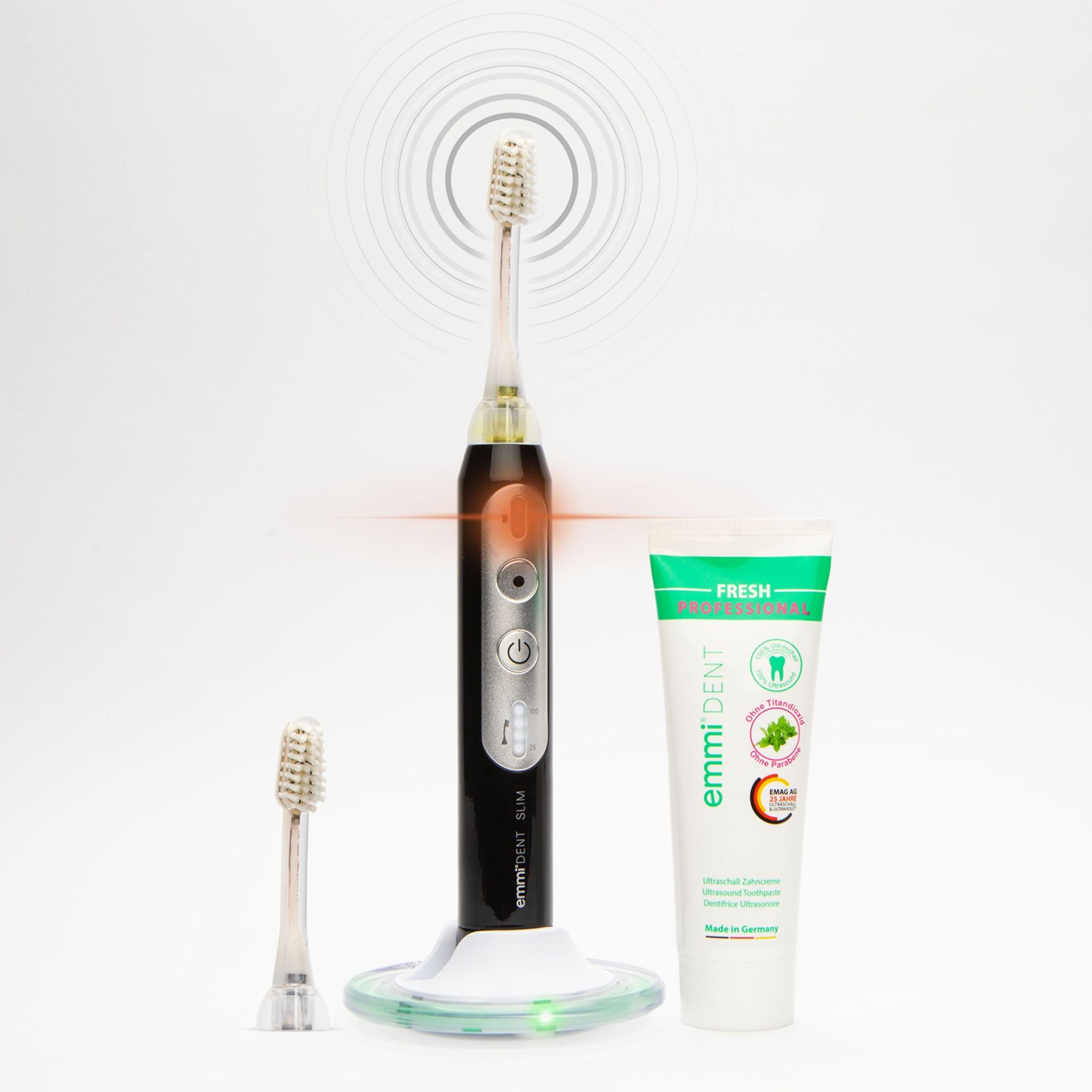
In short: anyone suffering from IBD should pay special attention to oral care. With the right dental care routine – for example, a gentle but effective cleaning with our emmi-dent ultrasonic toothbrush – you can optimally protect your teeth and gums and even prevent inflammation.
Periodontitis and IBD: What does science say?
Science is increasingly showing that people with chronic inflammatory bowel diseases (IBD) such as Crohn's disease and ulcerative colitis not only struggle with inflammation in the digestive tract. Oral health is also significantly affected by the disease – in particular, the risk of periodontitis is significantly increased in IBD patients. But why is that?
Inflammation in the gut and mouth – a close connection
IBD is a systemic disease, meaning: It does not only affect the gut, but can promote inflammation throughout the body – including the gums. Scientists refer to this as the "gut-oral axis principle", which states that inflammatory processes in the gastrointestinal tract influence the immune system and weaken the entire organism. This means that the gums are less able to defend themselves against bacteria, which increases the risk of gingivitis and ultimately periodontitis.
The immune system is weakened – bacteria have an easy time
A healthy body can keep bacteria in the oral cavity relatively well in check. But if the immune system is already heavily strained by chronic inflammation, harmful germs have an easy time. The body's own defenses can no longer effectively fight them, so bacteria multiply and penetrate deep into the gums. This often leads to inflamed gums, bleeding gums, and in the worst case, the breakdown of the periodontium.
Nutrient deficiency as an additional risk factor
Many people with IBD suffer from a deficiency of essential nutrients. Especially vitamin D, folic acid, and omega-3 fatty acids play a central role in gum health. If these micronutrients are missing, the gums can become more susceptible to inflammation, regenerate more slowly, and be less resistant to infections.
Particularly critical are:
- Vitamin D deficiency: Leads to a weakened immune system and can increase the risk of gum disease.
- Folic acid deficiency: Impairs cell regeneration in the gums, meaning wounds heal more slowly and inflammation persists longer.
- Omega-3 deficiency: These fatty acids have an anti-inflammatory effect and contribute to the reduction of gum inflammation.
Why is thorough oral hygiene particularly important for IBD?
If you suffer from chronic inflammatory bowel disease (IBD) such as Crohn's disease or ulcerative colitis, the inflammation not only affects your gastrointestinal tract – it can also significantly affect your oral health. Studies show that people with IBD have a significantly higher risk of gingivitis and periodontitis. This is because your immune system is weakened by the constant inflammation in the body, which means your gums are less resistant to harmful bacteria.
But that's not the only challenge: IBD can affect your oral health on several levels.
What problems can occur?
1. Higher risk of gum inflammation
The chronic inflammation caused by IBD can also spread to your gums. The gums become more sensitive, tend to bleed more easily, and can recede faster – a typical sign of periodontitis.
2. Dry mouth due to medication
Many IBD patients take medications such as cortisone or immunosuppressants, which can reduce saliva flow as a side effect. However, saliva is essential to keep bacteria in the mouth in check. A dry mouth means that harmful bacteria can multiply more easily, which not only promotes tooth decay but also gum inflammation.
3. Increased bacterial growth due to a weakened immune system
Since your immune system is already heavily challenged by IBD, it often cannot adequately defend itself against harmful germs in the oral cavity. This makes it easy for bacteria that cause periodontitis and gingivitis.
4. Sensitive gums that are more susceptible to irritation
IBD patients often report sensitive gums that react to hard toothbrushes or aggressive toothpastes with irritation and pain. If the gums are attacked, the risk of bacteria settling in the gum pockets and causing inflammation there increases.
The right dental care routine for IBD
If you suffer from chronic inflammatory bowel disease (IBD), you should pay special attention to your dental care. Due to the increased tendency to inflammation in the body and possible side effects of medication, your gums are more sensitive and susceptible to infections. With a targeted and gentle care routine, you can protect your gums and minimize the risk of periodontitis.
1. Gentle but thorough cleaning with ultrasound
Many conventional toothbrushes clean mechanically, which means that bristles come into contact with teeth and gums and can – depending on the pressure – irritate the already sensitive tissue. This can be particularly uncomfortable for people with IBD, as the gums often tend to be inflamed.
The solution? A touchless yet highly effective cleaning. Our emmi-dent ultrasonic toothbrush works with high-frequency ultrasonic waves that penetrate deep into the interdental spaces and gums to eliminate harmful bacteria and plaque – completely without mechanical abrasion. This means: Maximum cleaning without irritating the gums.
Advantages of ultrasonic cleaning:
- Gentle care, even for sensitive gums
- Deep-acting, removes bacteria even from hard-to-reach areas
- No brush abrasion, protects teeth and gums
2. Don't forget interdental spaces
Plaque and food debris often accumulate unnoticed between the teeth – and this is often where gum inflammation occurs. For people with IBD, thorough interdental cleaning is therefore particularly important.
However, dental floss can be painful for irritated gums or even cause small injuries. An oral irrigator is an excellent alternative, as it gently and effectively flushes food debris and bacteria from the interdental spaces – without stressing the gums.
Oral irrigators with individually adjustable water pressure are particularly recommended to adapt the cleaning to your personal preference.
3. Regular dental visits – early detection is crucial
Even with the best dental care routine, there are areas that you cannot clean optimally yourself. Therefore, you should schedule a professional dental cleaning (PZR) at least twice a year.
- Early detection of gum inflammation: Your dentist can detect early signs of periodontitis before it causes serious problems.
- Deep cleaning: During a PZR, stubborn deposits that can form despite good oral hygiene are also removed.
- Individual consultation: Your dentist can give you specific care tips tailored to your IBD.
4. The right diet for healthy gums
Our diet has an enormous influence on the health of our gums. Certain nutrients promote gum regeneration and help reduce inflammation.
Recommended nutrients for healthy gums:
- Vitamin D: Strengthens the immune system and has an anti-inflammatory effect. Good sources: sunlight, fish, eggs.
- Omega-3 fatty acids: Help regulate inflammation. Contained in flaxseed oil, chia seeds, and fatty fish.
- Vitamin C: Important for collagen formation in the gums. Contained in bell peppers, broccoli, and citrus fruits.
What you should avoid:
-
Acidic foods such as lemonades or vinegar, as they attack tooth enamel.
-
Sugary foods, as they promote plaque and tooth decay.
Gut health and oral health go hand in hand
If you suffer from IBD, you should take your dental care particularly seriously. Healthy gums not only contribute to your well-being, but can also positively influence your overall inflammation level in the body.
- Gentle dental care with the emmi-dent ultrasonic toothbrush protects your sensitive gums.
- Regular dental visits help to detect periodontitis early.
- A conscious diet supports both your gut and oral health.
The right dental care is a crucial step to maintain your oral health in the long term – especially with IBD.