





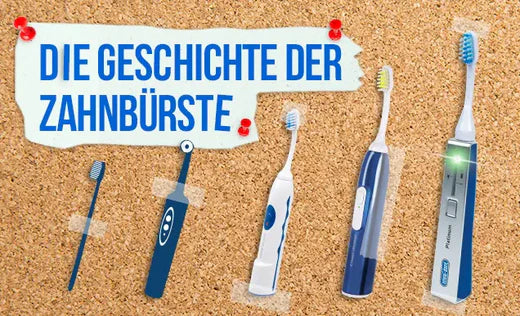
Brushing your teeth without a toothbrush? Unthinkable! But where did the idea come from, and how has the toothbrush developed over the years? How has the need for dental care and oral hygiene changed over time? The history and development of the toothbrush not only spans many, many years but is also very interesting.
The beginnings of the toothbrush: Chew sticks and more
An explicit date for the beginning of dental care has not been handed down. However, it is certain that indigenous peoples – even today – use chew sticks and chewing wood for dental care. The cleaning effect comes from various woods and plant juices. Through constant chewing, fine wood fibers are exposed, which in turn resemble a mini-toothbrush. Chew sticks date back to ancient Egypt and are estimated to be four thousand years old. However, this form of tooth cleaning is probably much older.
Between the 15th and 18th centuries, bamboo, bones, and even animal furs were used to clean teeth. The first real toothbrushes were pieces of bamboo or bone fitted with wild boar bristles. This form of toothbrush spread from China to Europe over the years.
By the mid-18th century, numerous adapted forms existed. Bamboo was replaced by bone, and wood by sponges or even cloths. Later, horsehair was also used as bristles.
Christoph von Hellwig invented one of the first toothbrushes in Germany. He made its handle from metal or wood and inserted horsehair bristles into it. This was precisely the problem: horsehair was too soft. Although users did not experience bleeding gums, the cleaning effect was lacking.
1880: The first electric toothbrush model is on the market
While the manual toothbrush was slow to establish itself, the first electric toothbrush was patented as early as 1880. Production costs were enormously high at the time, so it took another 60 years until the first electric toothbrush was available in stores.
Around the same time, about 1938, horsehair was replaced by nylon bristles. Wooden handles were gradually replaced by plastic handles. Within the next 10 years, the toothbrush developed into a mass-produced item.
A device called Broxodent, developed by the Swiss Dr. Philippe-Guy Woog, was the first automatic toothbrush. His model was a trailblazer for all subsequent electric toothbrushes.
Oral-B picked up on Woog's idea in 1963 and successfully established itself on the market with the Mayadent model. The problematic aspect at the time was the power cable, which ensured the power supply. Only many years later was the cable replaced by batteries and rechargeable batteries, and later by charging stations.
1987: Dental care in focus
From 1987 onwards, dental care was in focus. Oscillating models and rotating brush heads removed dirt and offered a better cleaning result. Gradually, the models improved so that they were in no way inferior to the classic manual toothbrush.
In the 1990s, the round brush head also became established; sonic toothbrushes conquered the market. Thanks to improved cleaning performance, they were gladly recommended by dentists. Cleaning was not only much easier but also significantly more effective.
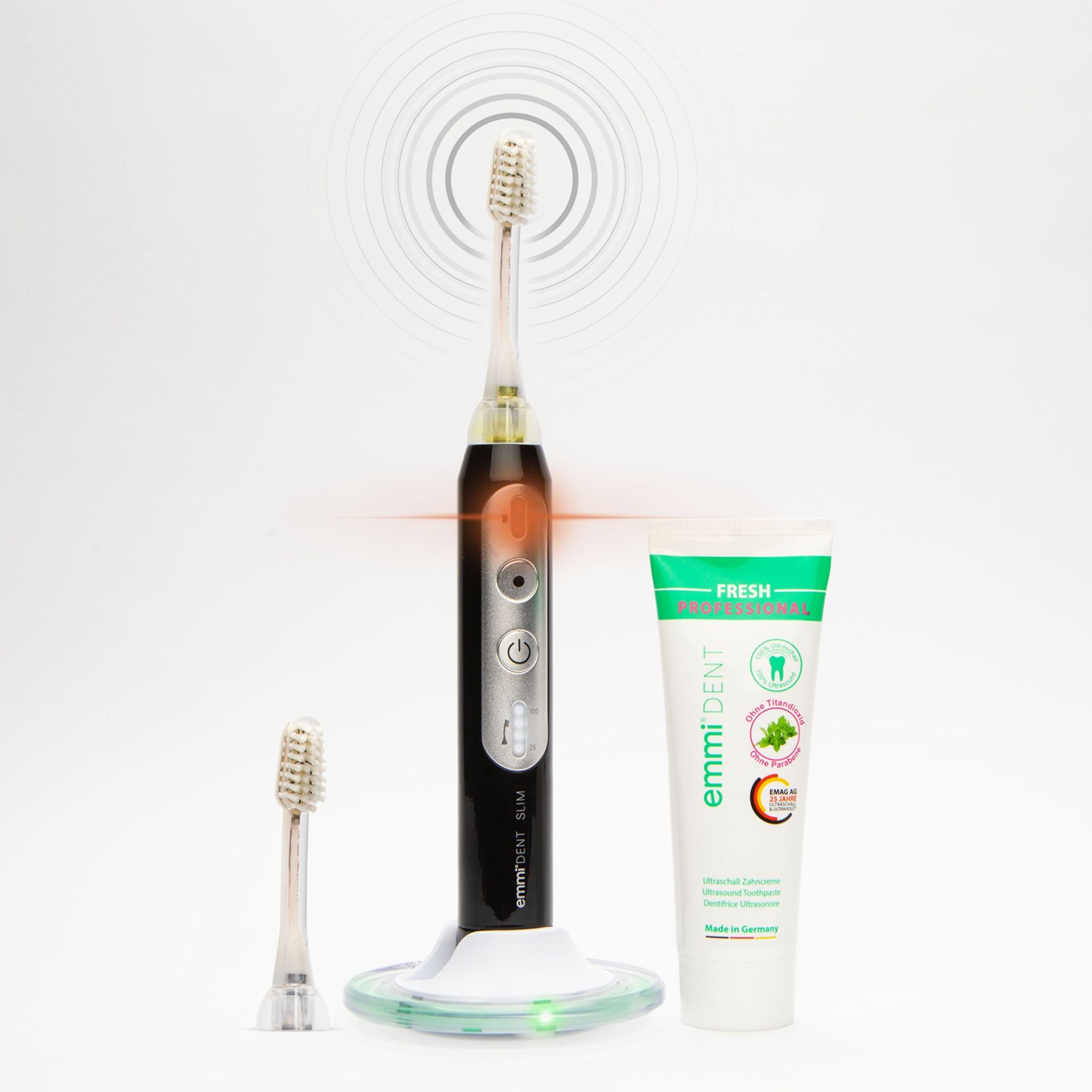
From 2008 onwards, the ultrasonic toothbrush, as a further development of the sonic toothbrush, made headlines. Ultrasonic toothbrushes like the models from Emmi-Dent impress with a very high frequency range. Up to 96 million oscillations per minute are possible. In terms of application, ultrasonic toothbrushes differ significantly from sonic toothbrushes. They simplify the brushing experience many times over and deliver brilliant results.