













Everyone is familiar with white spots on their teeth. Our blog post today explains whether this is a purely aesthetic problem or if there is a concrete need for action. There is no general way to say where white spots on teeth come from. Various reasons can be causative for white spots on teeth. A mild fluorosis, a childhood accident, an incipient caries infection, or heredity can lead to white spots on teeth. An exact diagnosis can only be made by a dentist.
White spots on teeth due to increased fluoride intake
White spots in the area of the middle incisors in the upper jaw are often attributable to the first two years of life. Excessive fluoride intake in infancy can lead to white spots on the teeth. Tooth enamel forms during the first years of life. Excess fluoride deposits as white spots on the tooth enamel. These spots are very persistent and remain until tooth replacement. Sometimes, yellow or brown spots on the teeth can also be due to excess fluoride.
White spots on teeth as a result of a dental accident in childhood
Children not infrequently have unpleasant encounters with hard surfaces. While children often recover well from minor accidents, their teeth may not. Since permanent teeth are already formed in the jaw during the primary tooth stage, they can also suffer injuries from a fall. This is always the case when the primary teeth are pressed against the jaw during impact. If the tooth germ of a permanent tooth is hit during a fall, white spots can form on the tooth crowns – like a kind of pressure mark.
White spots on teeth due to incipient caries
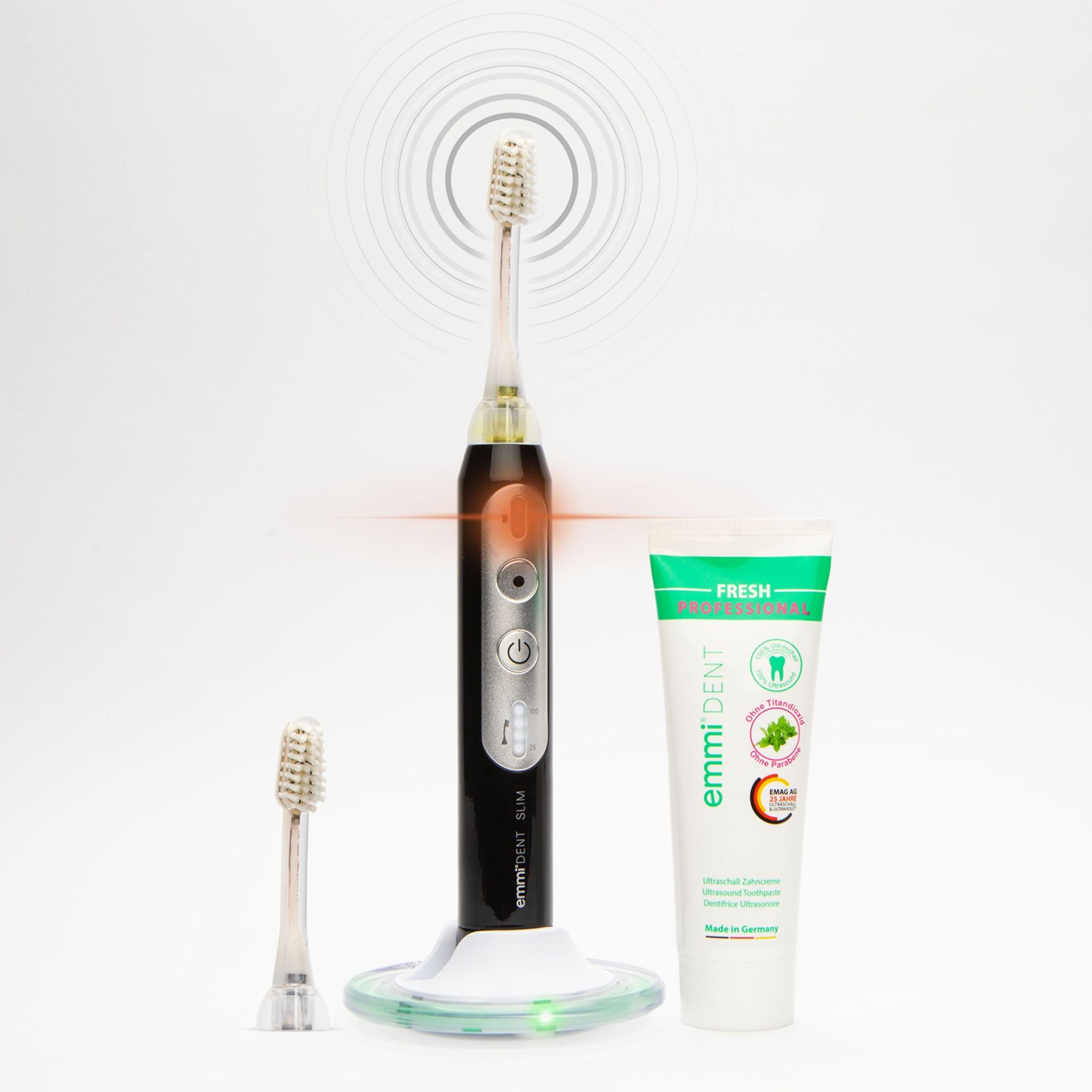
White spots on teeth can also indicate an incipient caries infection. So-called "white spots" can in most cases be stopped by thorough brushing, for example with our emmi®-dent ultrasonic toothbrush, and professionally performed fluoridation. If you are not sure whether your white spots on your teeth are incipient caries or fluorosis, then you should examine the spots very carefully. Fluorosis spots are large and not clearly demarcated. They appear symmetrically on both sides of the jaw. Incipient caries makes teeth sensitive. Cold drinks or acidic foods will in this case lead to unpleasant toothaches.
White spots on teeth as an inherited trait
White spots on teeth can also be hereditary. To check for a hereditary predisposition, you should find out if your parents have exactly the same spots.
White spots on teeth: When to see a dentist?
Have you always had white spots on your teeth and your dentist has not made any statement about them so far? In this case, there is no need to worry. However, if the spots are new, you should have them thoroughly checked by your dentist. Fluorosis spots are more of an aesthetic problem than a health one. In this case, the white spots are not treated. Brown or yellow fluorosis spots can be lightened somewhat, while for white fluorosis spots, the surrounding tooth can be lightened. However, only have the lightening performed by your dentist. Over-the-counter products often cause even more damage.