







For some, it's a constant companion; others chew it now and then – chewing gum. It reliably provides fresh breath, cleans teeth, and stimulates saliva production. Pure chewing pleasure has increasingly faded into the background in recent years, as manufacturers nowadays focus more on offering chewing gums that are designed to sustainably promote dental health.
But is chewing gum really good for your teeth, and can it contribute to dental care? We address this question in today's blog post.
Sugar-Free Chewing Gums as Support for Oral Hygiene
In every supermarket or discount store, chewing gum lines the shelves in the front checkout area. Many of them are advertised as sugar-free and tooth-friendly. Whenever bacteria in the mouth break down sugar, they produce acidic metabolic products. These breakdown products can lead to tooth decay. Since chewing gum is chewed for a longer period, the sugar it contains remains in the mouth longer than with comparable other sweets.
Since sugar provides food for bacteria, leading to an increased excretion of acidic breakdown products, chewing gums with sugar can indeed cause significant damage to your teeth in the long run.
The situation is different with chewing gums declared as sugar-free. They deprive harmful bacteria of their food source and neutralize existing acids in the mouth. They can very effectively help protect your teeth from cavities. Chewing gums enriched with fluoride and calcium are also said to have a preventive effect. They remineralize the teeth and can indeed be considered helpful supporters in the area of dental health.
Did you know that chewing gum generally has a positive effect? If you consume sweet foods or carbohydrate-rich foods, an acidic environment quickly develops in your mouth. These acids attack your teeth and promote the development of cavities. If you chew gum immediately after eating, it promotes saliva production. The pH value in the mouth rises again, and existing acids are neutralized. Food debris and cavity-causing bacteria are removed from the teeth by chewing gum.
Chewing Gum is Not a Substitute for Toothbrushing
Despite the positive properties, you should always chew even tooth-friendly and sugar-free chewing gum with care. You should never consider that chewing gum can replace daily dental hygiene. Only a good toothbrush and thorough brushing can effectively care for your teeth and promote your dental health.
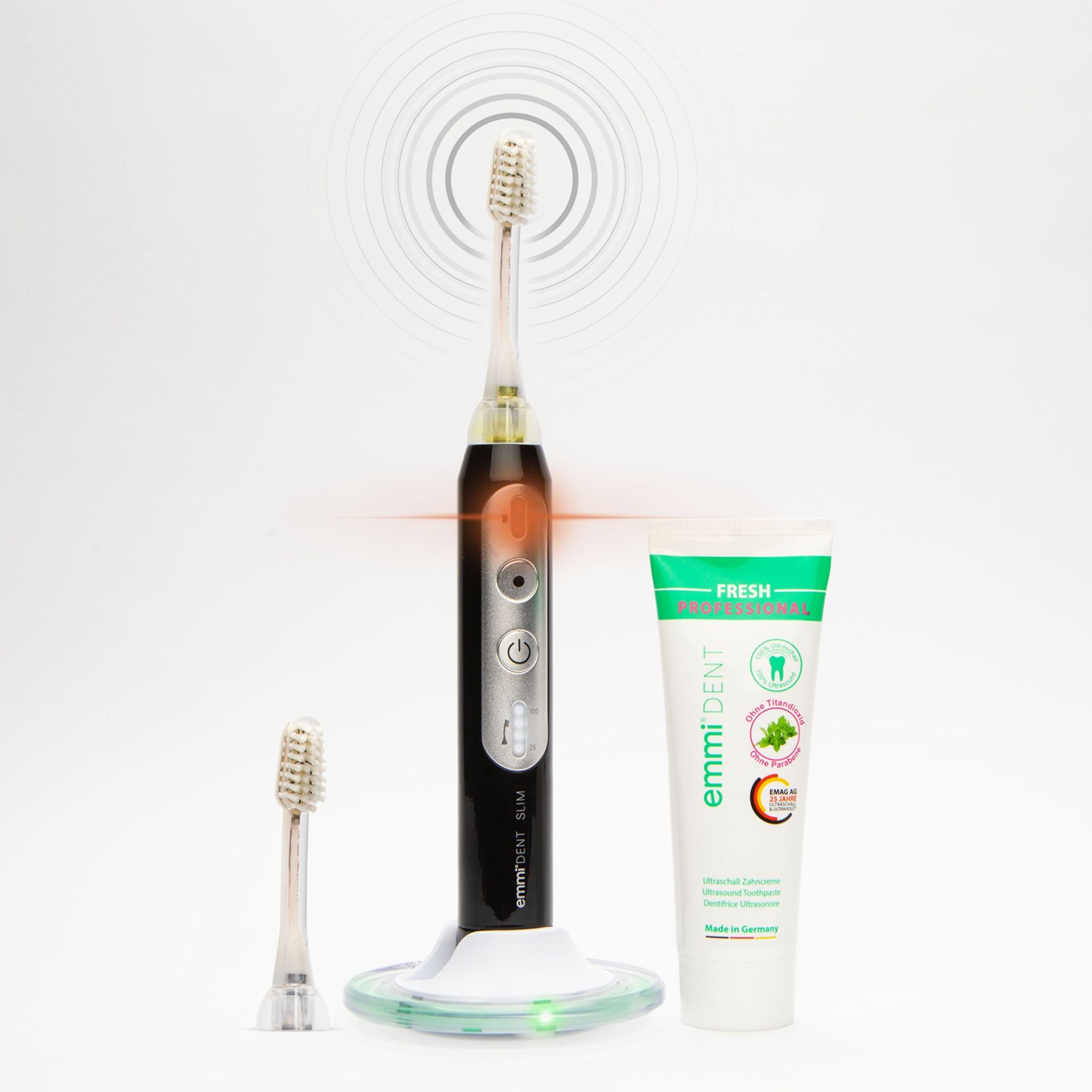
Daily tooth cleaning with our emmi®-dent ultrasonic toothbrush proves to be ideal, time-saving, and gentle. Protect your teeth and sensitive gums. Rely on the advantages of state-of-the-art ultrasound technology. Without scrubbing or great pressure, ultrasound removes plaque from your teeth and cleans the entire oral cavity very efficiently.
Caution: If you chew gum regularly or even excessively, there is a risk that your jaw muscles may tense up and you may possibly overload your temporomandibular joint. This can lead to pain in the muscle area. Clicking noises can also indicate an overload.