











Eliminate Bad Breath Thanks to Proper Dental Care
A dazzling white smile looks beautiful, creates a friendly impression, and is attractive; fresh breath is a must. In today's blog post, we'll delve into the question of how bad breath develops and what you can do about it.
Bad Breath and its Causes
Bad breath has various causes. Among the most common are bacteria that accumulate on the teeth and in the interdental spaces. They break down food and its remnants, thereby producing foul-smelling sulfur compounds.
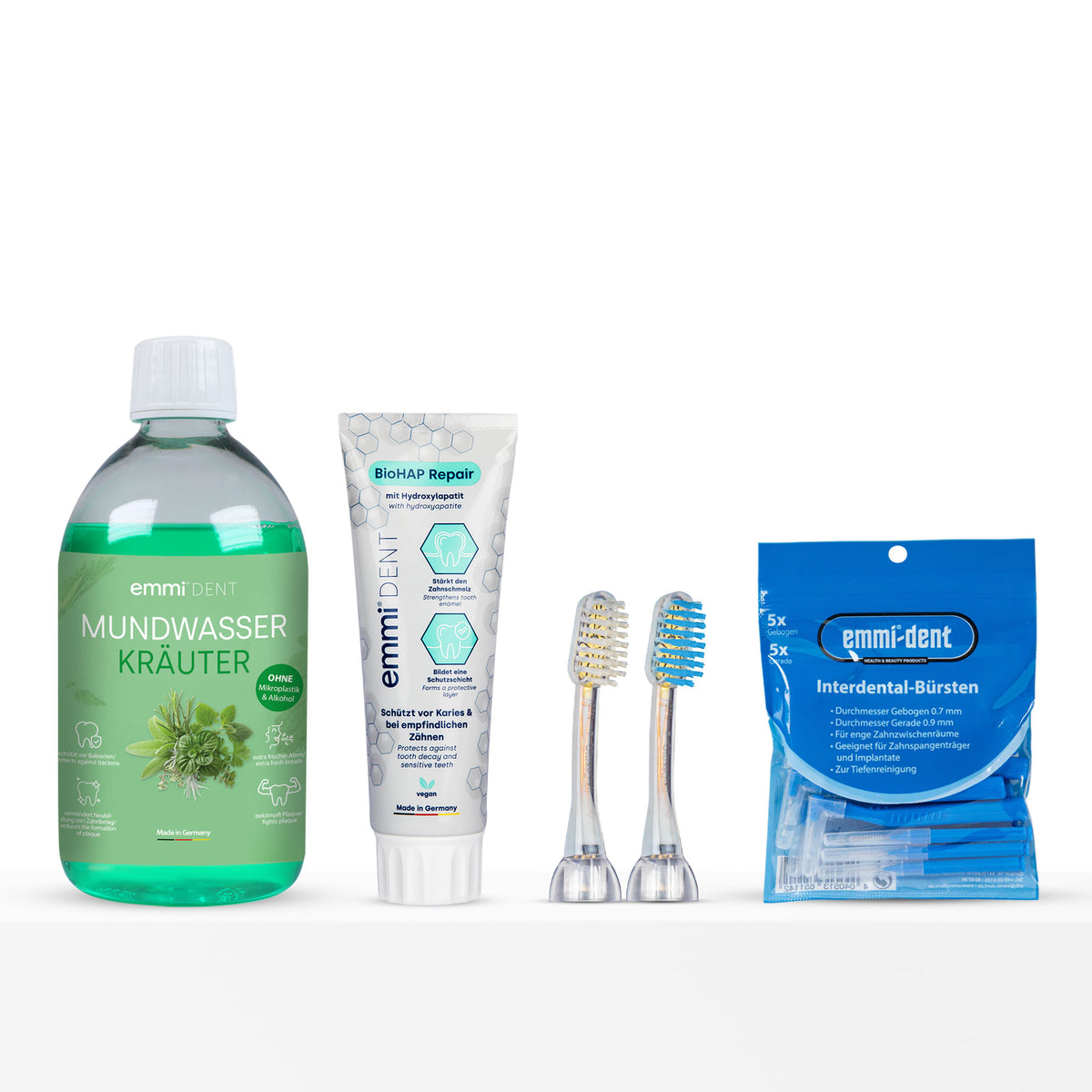
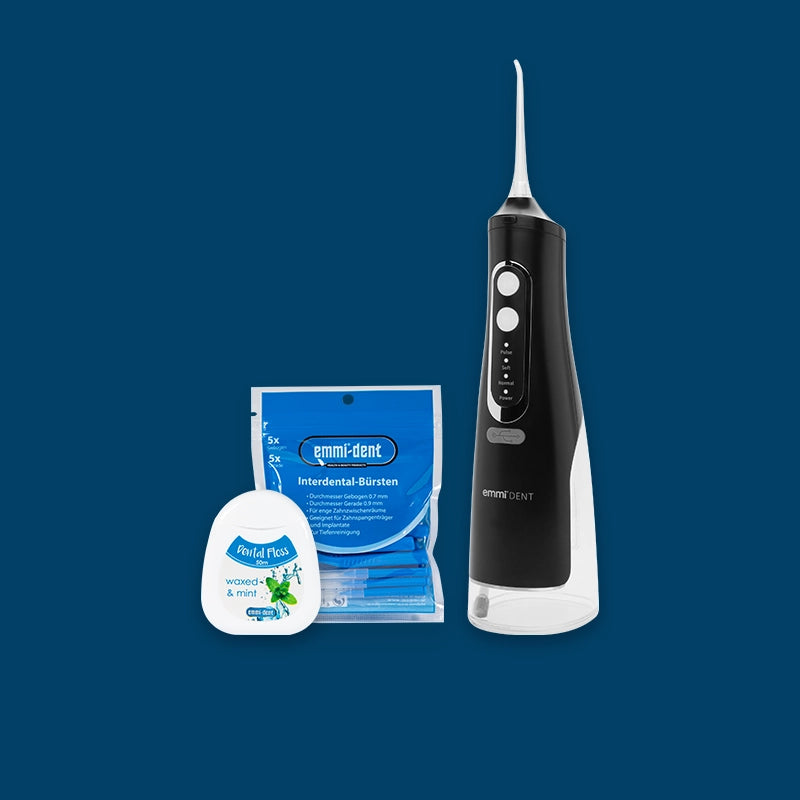
Bad breath can therefore be combated very effectively through thorough oral hygiene. You should brush your teeth at least twice a day – ideally in the morning and evening. For example, use dental floss to thoroughly remove food debris and plaque from between your teeth.
You can also reduce bacteria in your mouth by cleaning your tongue. Special tongue cleaners or tongue scrapers are ideal for this. The same cleaning principle can also be applied to your palate and the inside of your cheeks.
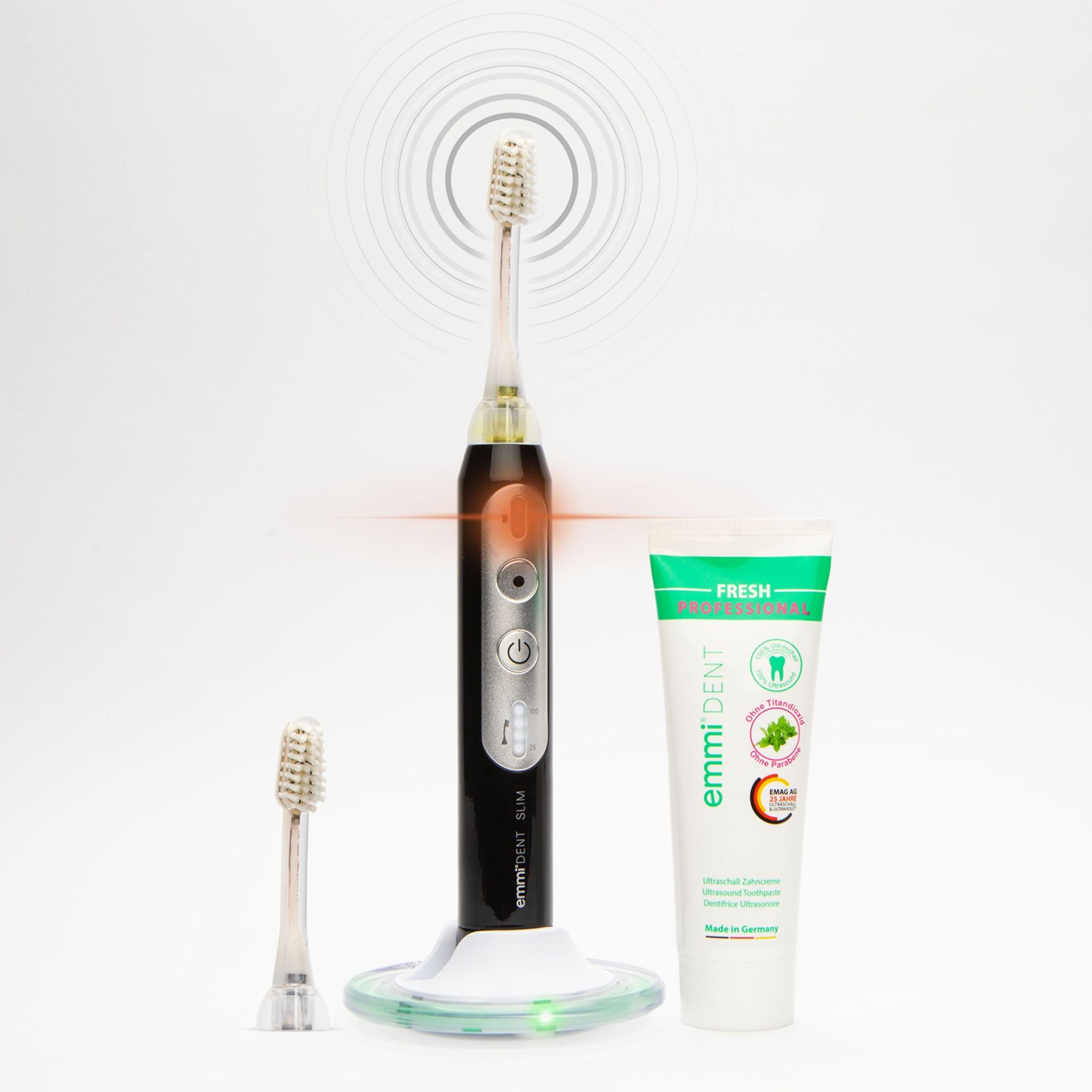
If the aforementioned cleaning components are too much for you, you should familiarize yourself with our emmi®-dent ultrasonic toothbrush. Its specific cleaning function is based on state-of-the-art ultrasonic technology. Ultrasonic toothbrushes not only very efficiently rid the teeth, but also the interdental spaces, gums, and oral mucous membranes of odor-causing bacteria.
Preventing Bad Breath – Drink, Chew, Dental Care
If the mucous membranes in the mouth are too dry, this can also be a cause of bad breath. Ideally, saliva flushes food particles out of the oral cavity. However, if saliva production is disturbed or limited, food remnants remain in the mouth. They settle between your teeth and even accumulate on your tongue and in the upper throat area.
Therefore, always make sure to drink regularly and in sufficient quantities. Especially after eating, a glass of water for rinsing proves ideal. Chewing sugar-free chewing gum also stimulates saliva production and thus promotes the removal of existing food debris from the mouth.
Citrus fruits, some vegetables, and fiber-rich foods also stimulate saliva production. Tea with tannins, alcohol, coffee, and regular nicotine consumption, however, tend to dry out the oral mucous membranes.
If bad breath occurs predominantly in the evening, a lack of oxygen in the saliva can be responsible. This also increasingly leads to foul-smelling breath.
Bad Breath: When to See a Dentist?
Caries and gum inflammation can also be causative for severe bad breath. Infections in the nasopharyngeal area are rarer, but can also be a cause of bad breath. Esophageal inflammation or diseases of the gastrointestinal tract can also cause bad breath. Diseases of the liver, kidneys, or diabetes can also be accompanied by bad breath. In these cases, bad breath is only to be considered a symptom.
Should your bad breath not improve despite adequate and thorough dental care, we recommend that you consult a dentist. He will first examine your teeth. If he cannot find a cause in your teeth, he will refer you to your family doctor to clarify organic causes.